Characters are important in storytelling in media. A well-designed character leaves a lasting impression on the audience, evokes emotions, and drives the story forward. In animation, shape language is a fundamental tool that uses different shapes and exaggerated deformations to convey meaning, emotions, and personality traits. By carefully selecting these shapes, animators enhance storytelling and character impact.
History of Shape Language in Animation
The use of shape language can be traced back to the early 1900s, when animation was still in its exploratory stage and character design was mainly based on simple geometric shapes for fast drawing and smooth animation.
In 1908, French animator Émile Cohl’s ‘Fantasmagorie’ debuted, mainly telling the story of crude stick figures interacting with various deformed objects. Although it was not yet called shape language art, he laid the foundation for the way in which animated characters highlight personality traits through shapes and deformations.
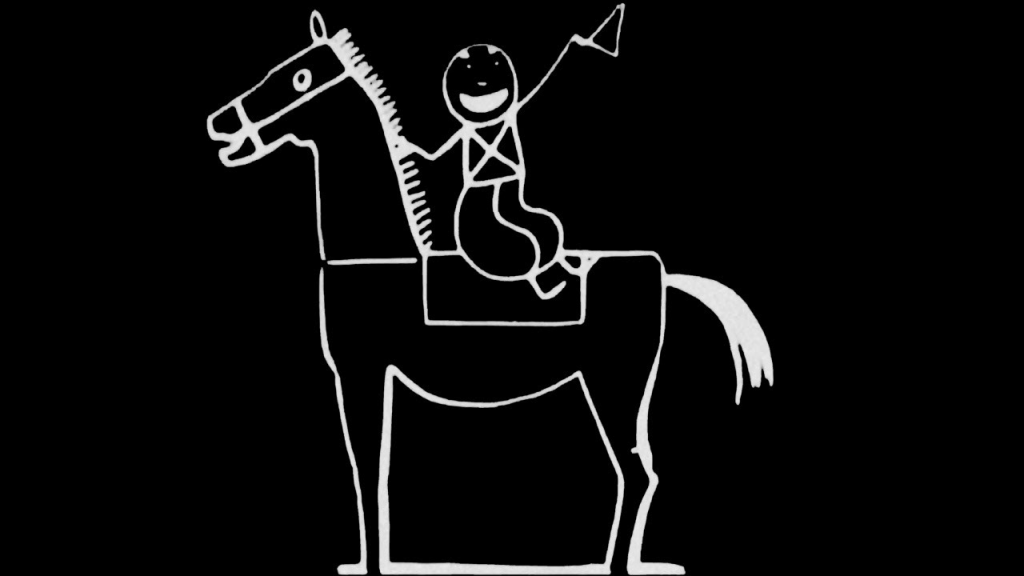
‘Fantasmagorie’ (Émile Cohl, 1908)
In the same year, his film ‘Le Cauchemar de Fantoche‘ refined this approach to make the character design more in line with the personality.
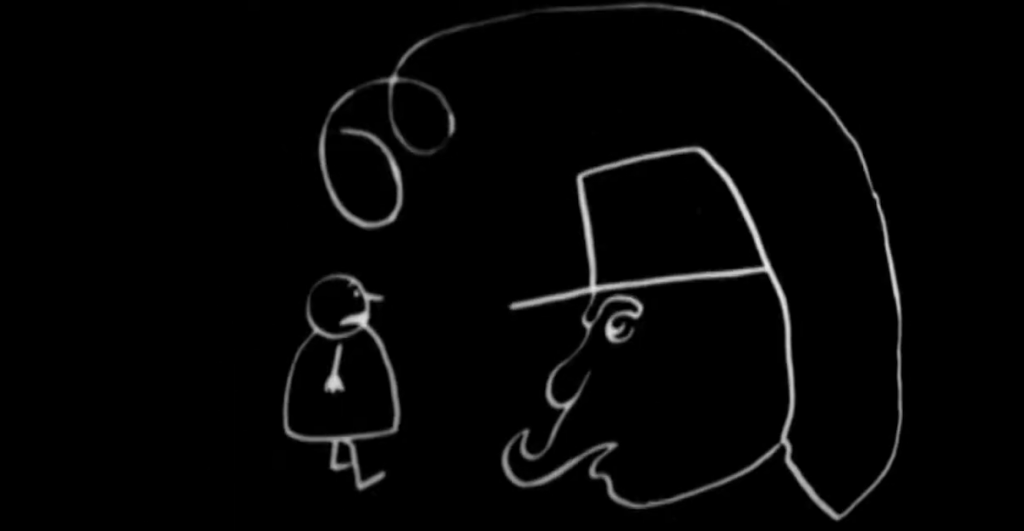
‘Le Cauchemar de Fantoche’ (Émile Cohl, 1908)
In order to facilitate fast drawing of smooth animation movements and make the characters more friendly, early characters of animation studios such as Disney generally used circular elements to design characters. For example, Mickey Mouse in ‘Steamboat Willie’ in 1928 was loved by the audience.
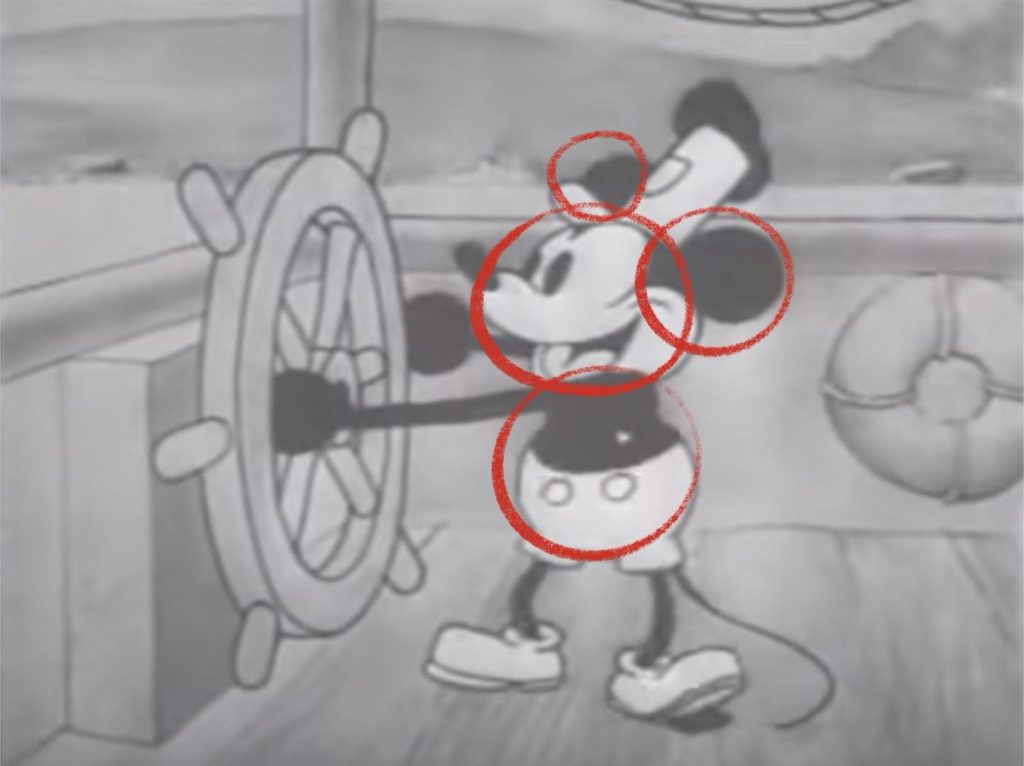
‘Steamboat Wille’ (Disney Studio, 1928 )
As animation production technology matured, shape language contrast began to be used systematically. For example, in ‘Snow White’ in 1937, circular and square elements were commonly used in the design of positive characters, while the villain (stepmother) was shaped by sharp triangular elements.
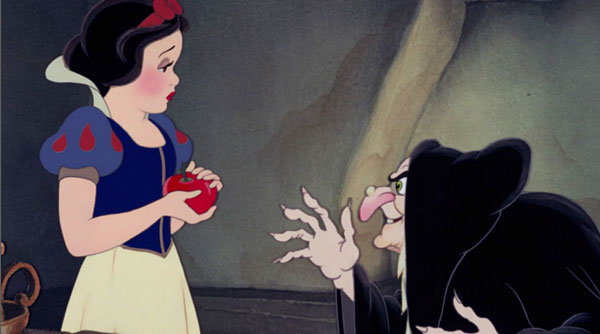
‘Snow White’ (Disney Studio, 1937)
In the 1970s, in order to improve efficiency and reduce costs, the shape language of the characters was exaggerated, and the twelve animation principles were cleverly integrated to highlight the charm of the character performance. The Tom and Jerry produced by Hanna-Barbera Studios is a good example. There were many triangle element involved in Tom which highlighted his crafty and design of Jerry are led by circle which made him more cute. The use of shape language without dialogues perfectly reflects the different personalities and funny effects of the characters.
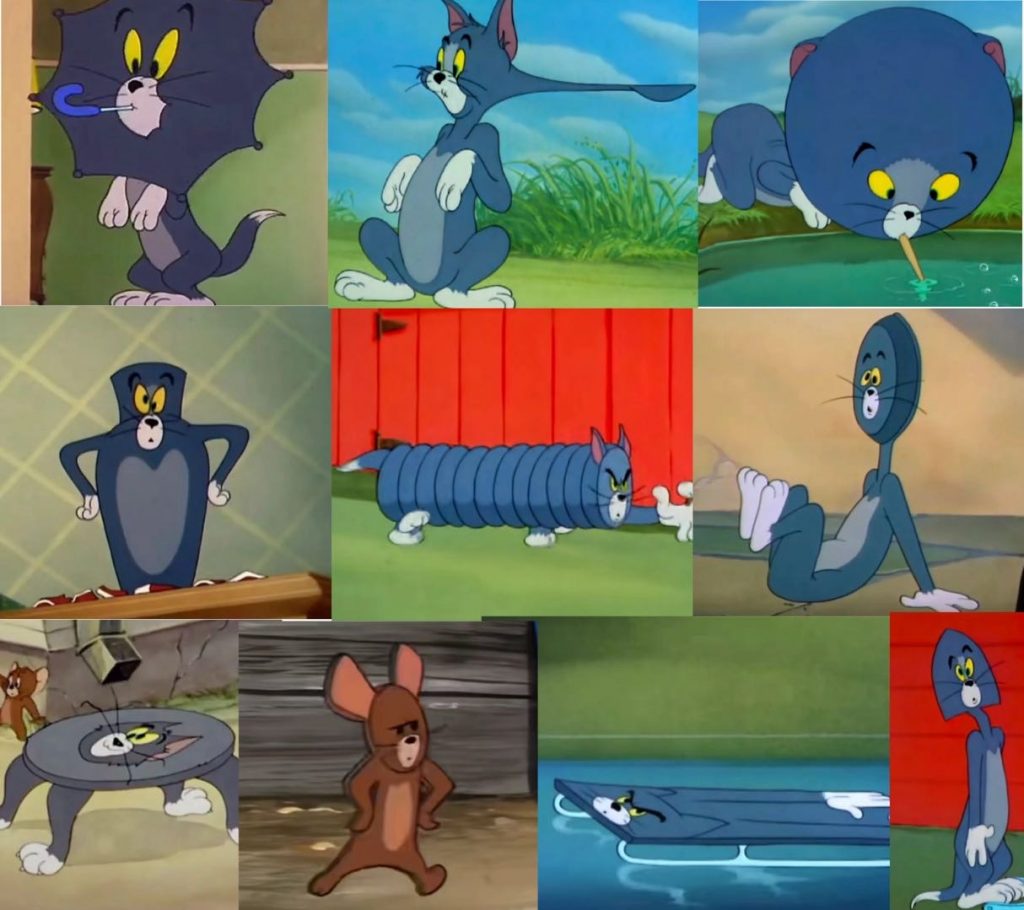
‘Tom and Jerry’ (Hanna-Barbera Studio, 1975)
With the development of 2D and CGI animation, shape language is used more freely and exaggeratedly. In ‘Inside Out’ which was released in 2015 , the shape language of different emotional characters highly matches their personalities.
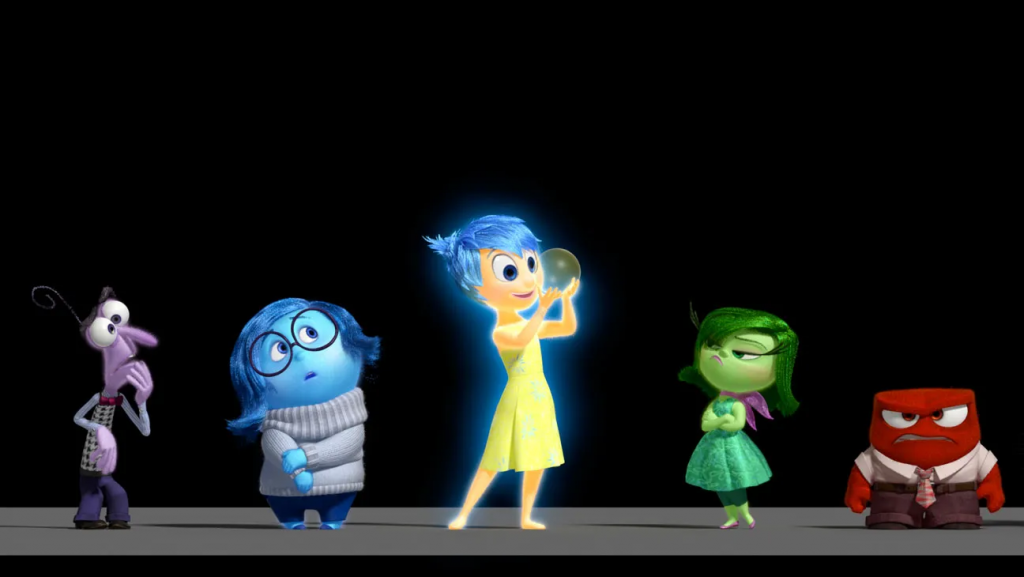
‘Inside out'(Pixar Animation Studio, 2015)
Theory of Shape Language in Animation
“Compared to facial expressions, a character’s body language and overall posture carry more emotional weight.”
“Communicating a personality through body language ,and the silhouette is far more potent than only showing emotion through facial expression. That’s why we usually tend to draw the body first and then add more details with the face.“
David Colman, who is a character designer won Emmy
Shape silhouettes play a vital role in character design. Character designer always view character as combination of shape to attribute subconscious qualities. They can be divided into three main types: geometric, organic, and abstract. Each type has specific associations that influence the perception of a character.
Geometric shapes – circles, squares, and triangles – are the most commonly used shapes in animation.
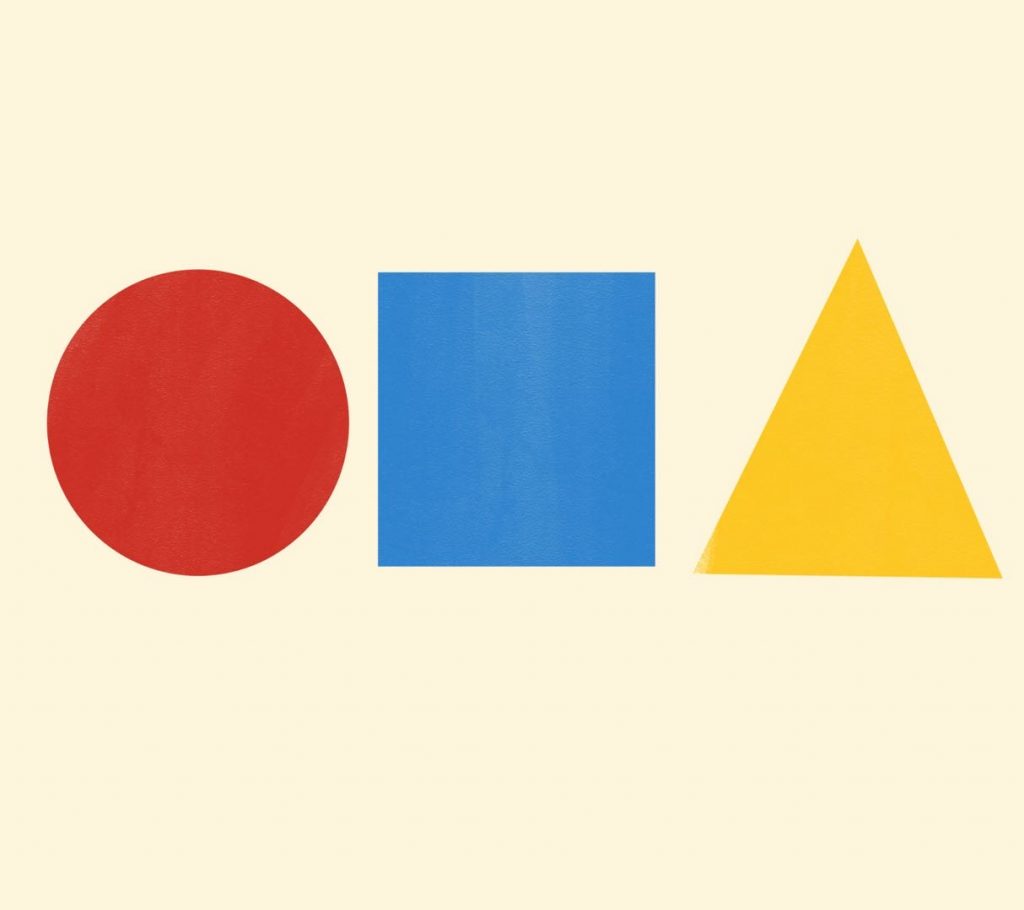
In shape psychology, circles symbolize warmth, solidarity, and friendliness. Characters such as Mickey Mouse and Baymax use circles to appear soft and approachable.
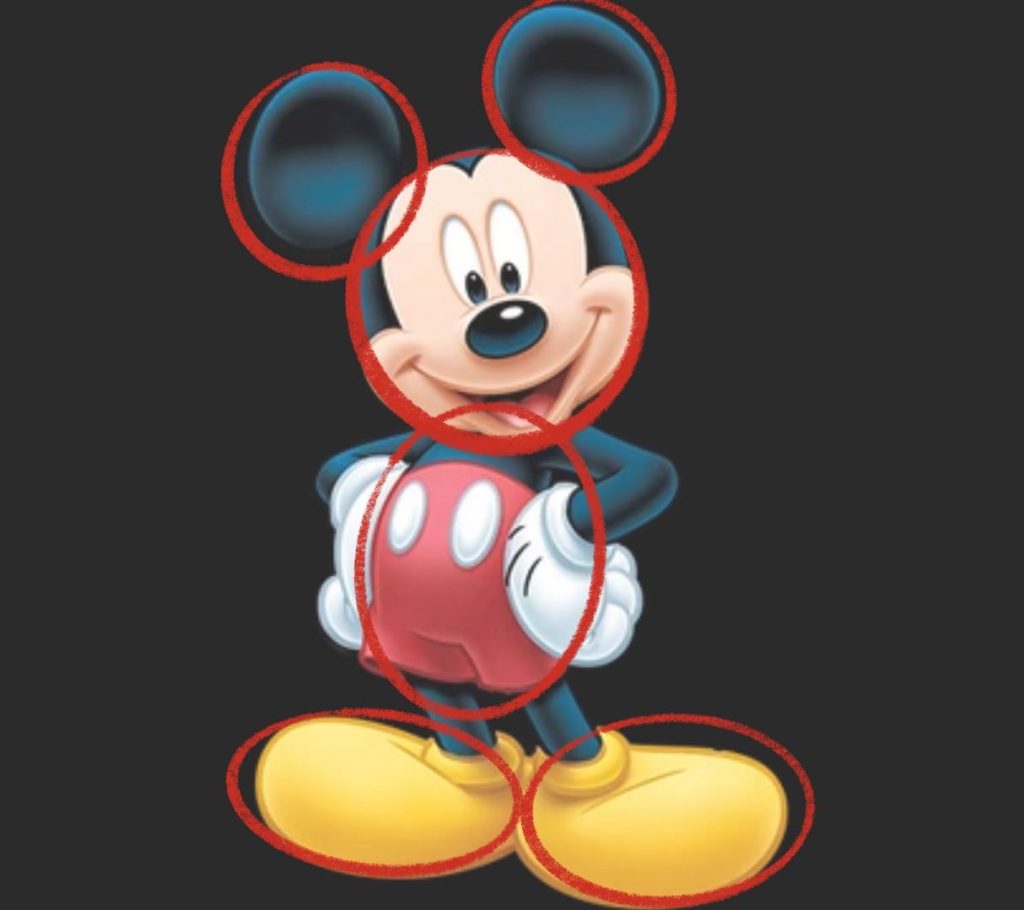
Mickey Mouse from ‘Mickey’s Christmas Carol ‘ in 1983
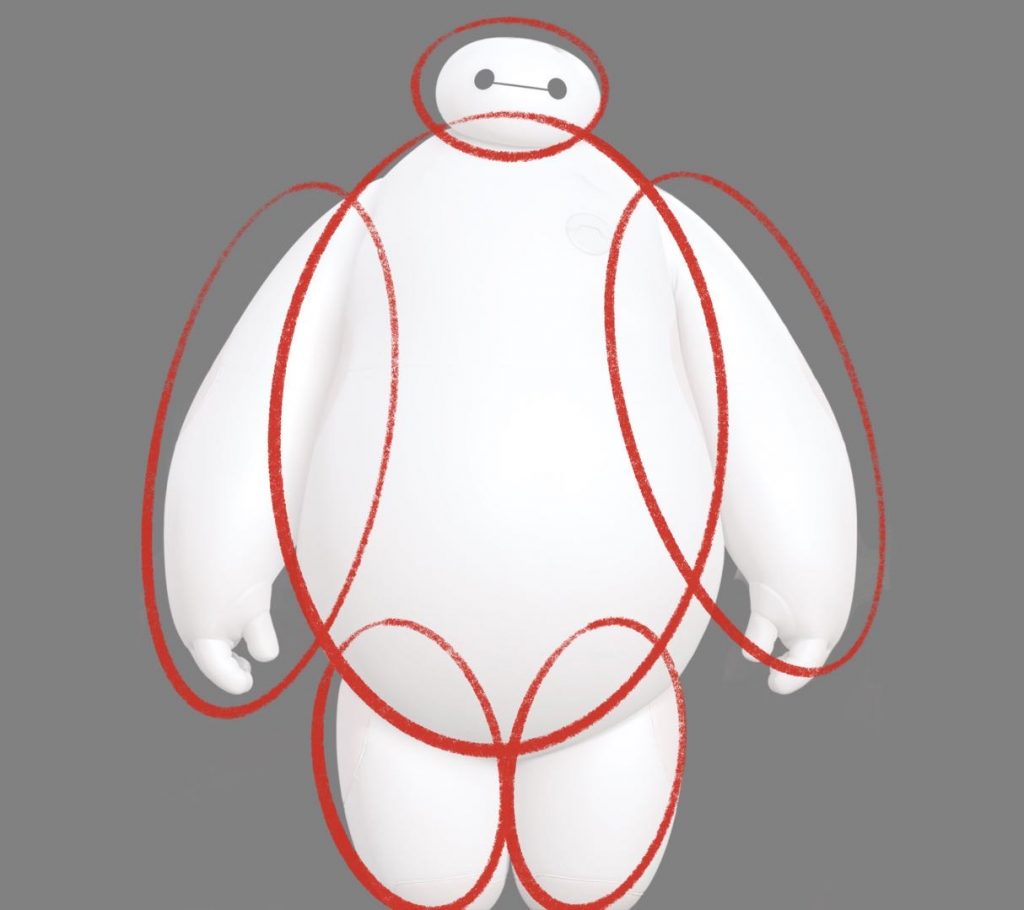
Baymax from ‘Big Hero 6’ in 2014
Squares hold a controversial position in art psychology. They can represent stability and security, or a sense of oppression. They are also seen as masculine shapes. Used to add depth to a character, can give a sense of stubbornness, solidity, reliability, and support. Ralph in Wreck-It Ralph is composed of squares, giving a sense of strength and clumsiness. Carl in Up has a square design, highlighting his stubbornness and stillness. Among villains, Scar in The Lion King has a square body but shows a sense of oppression and treachery.
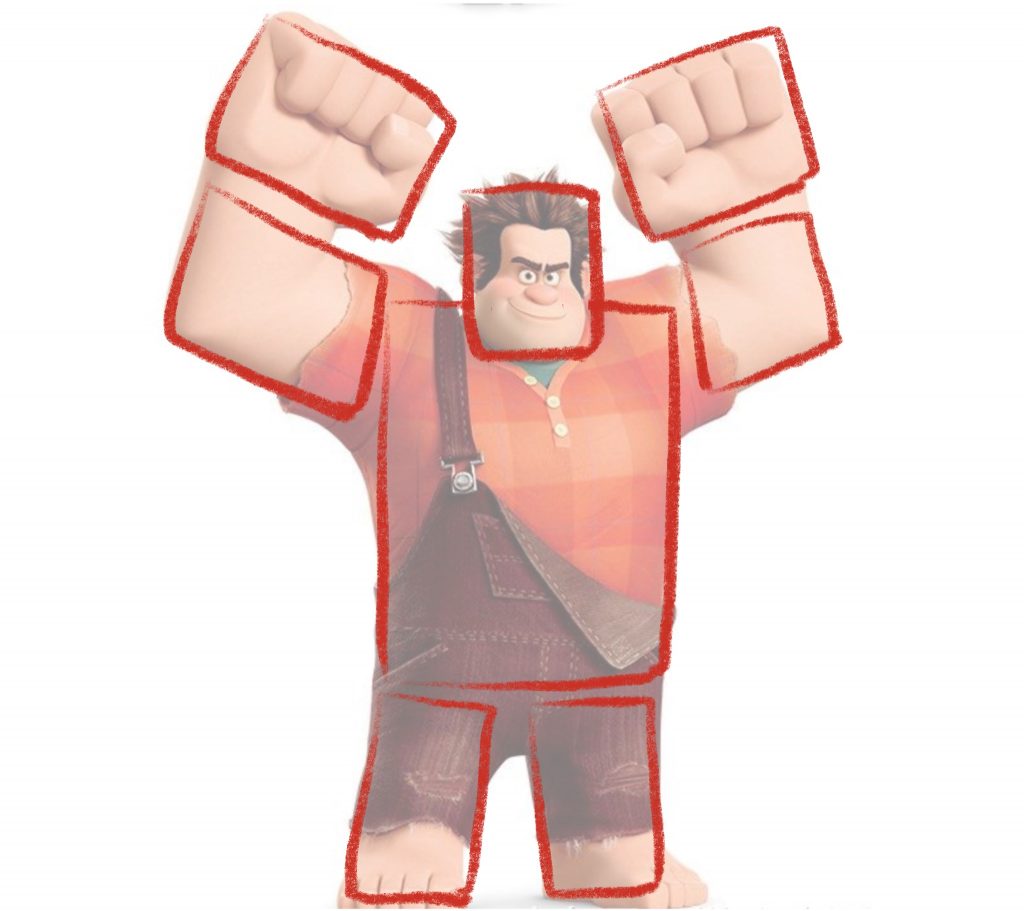
Ralph from ‘Wreck-It Ralph’ in 2012
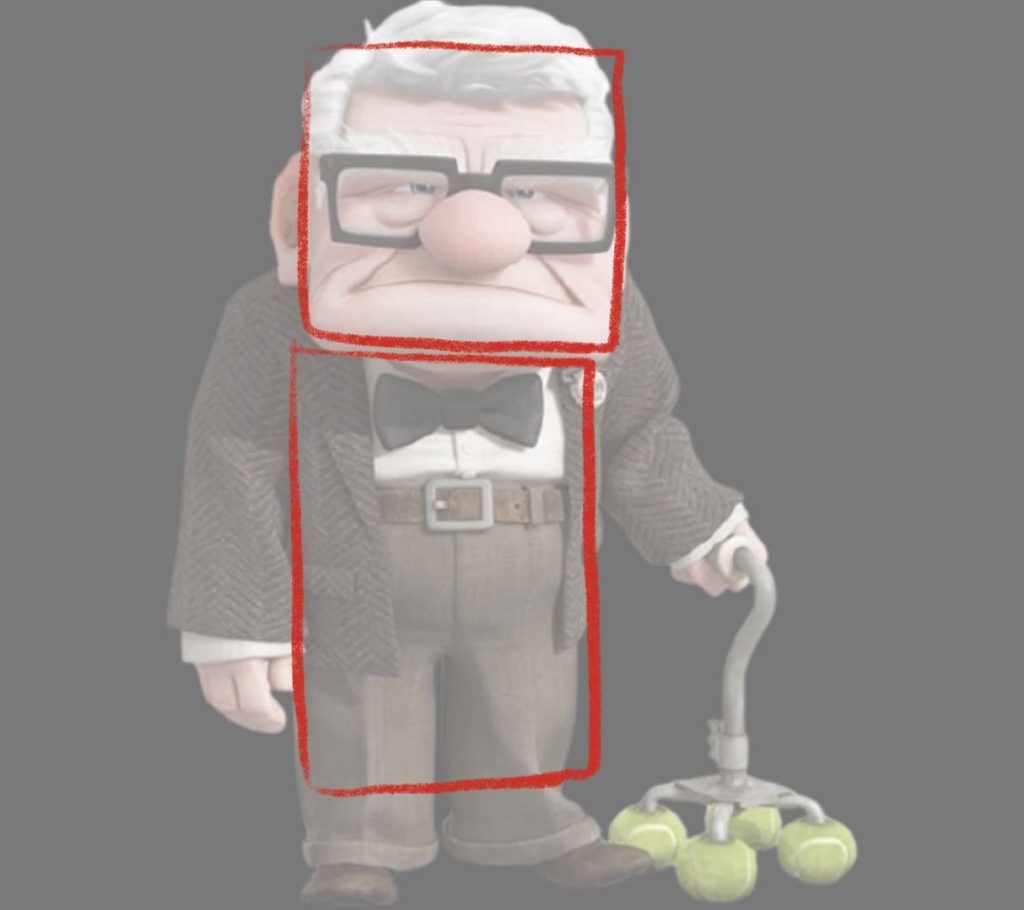
Carl from ‘Up‘ in 2009
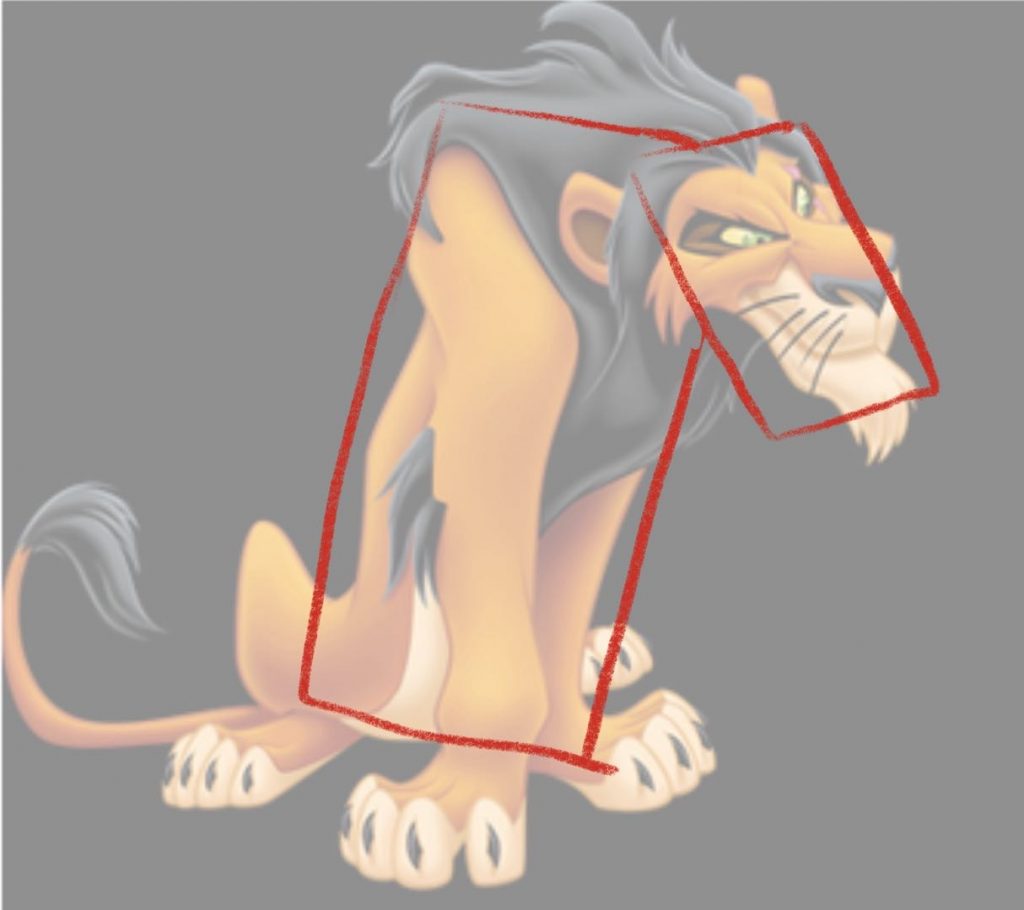
Scar from ‘Lion King’ in 1994
Triangles convey energy, tension, and danger. Villains like Jafar (Aladdin) and Syndrome (The Incredibles) feature sharp angles that emphasize arrogance and instability.
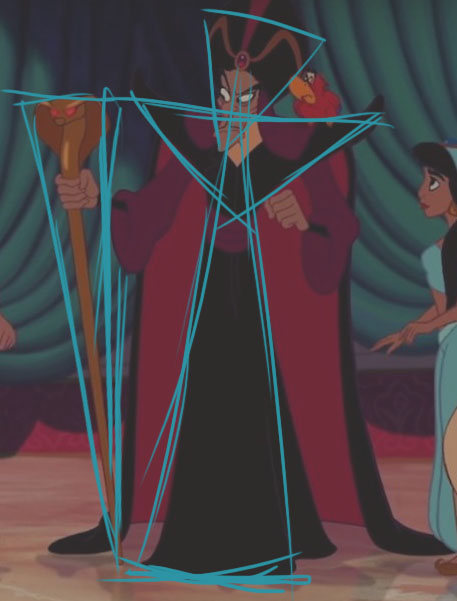
Jafar from ‘Aladdin’ in 1992
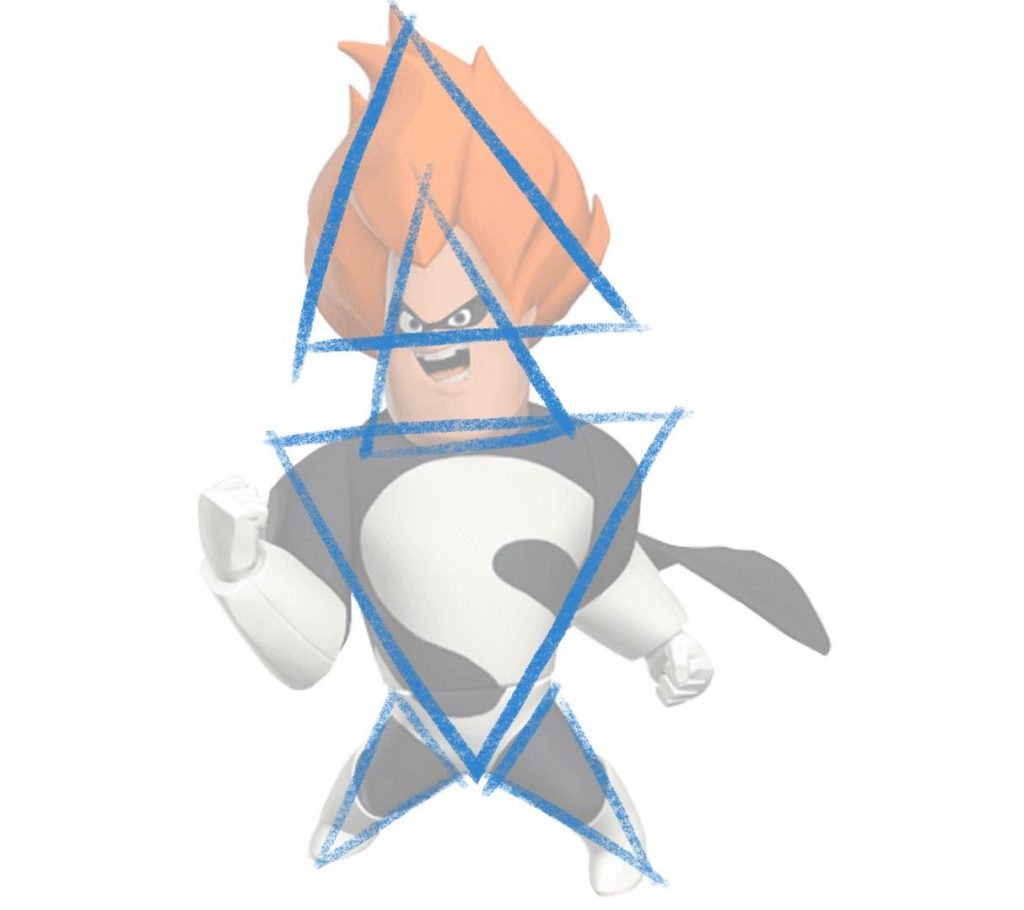
Syndrome from ‘The Incredibles‘ in 2004
Organic shapes are irregular and flowing like curve, reminiscent of mystery and flexibility.
Abstract shapes blend both of organic and geometric elements to create unique and expressive designs. It could bring sense of freedom and unpredictable.
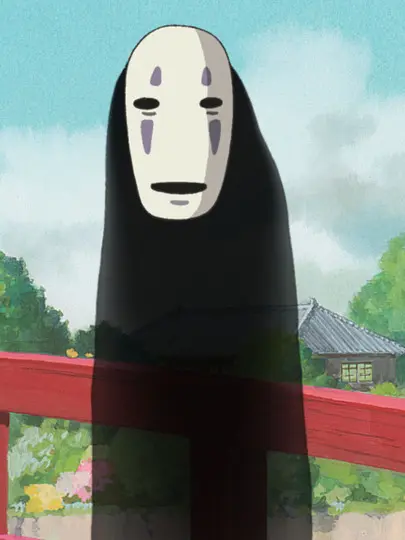
No-Face from ‘Spirited Away’ in 2001
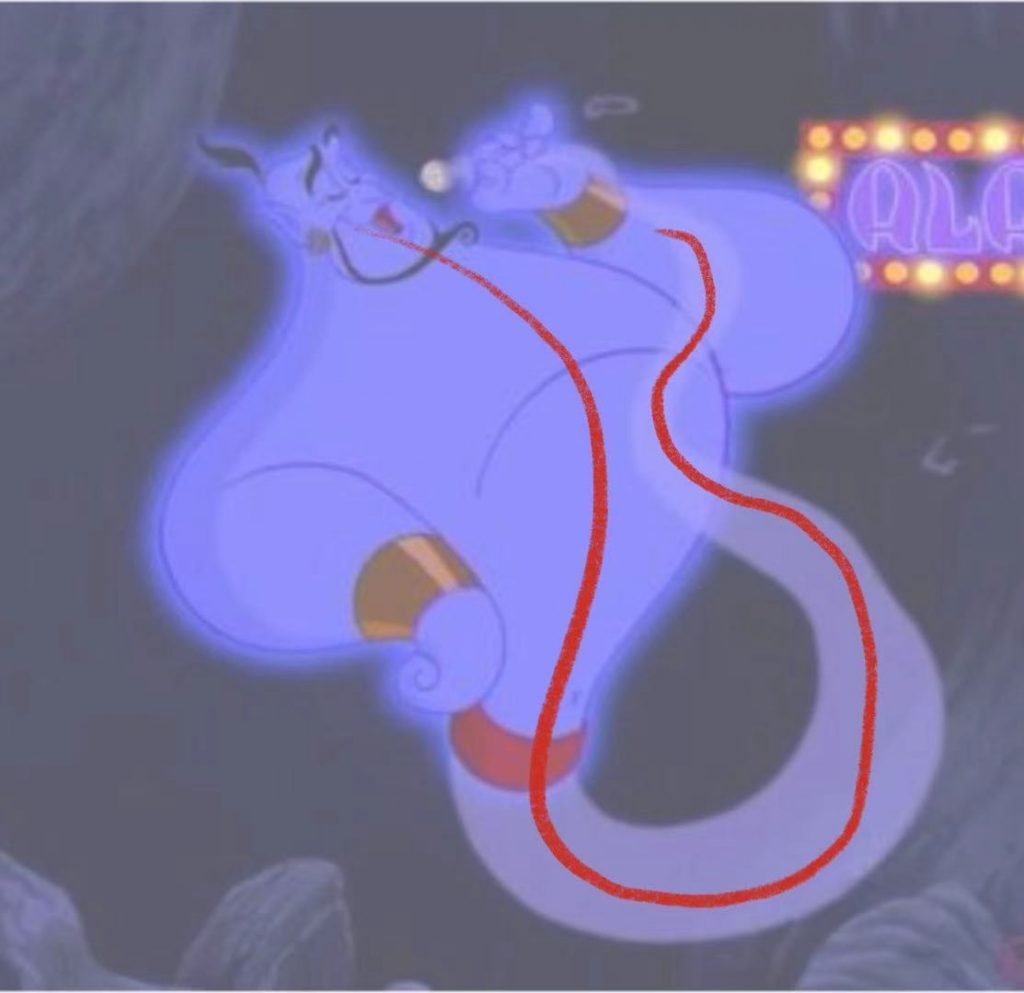
Genie from ‘Aladdin‘ in 1992
It could be stated that Characters with more complex personalities are often made up of multiple shapes. For example, Sully from Monsters University is mostly made up of circles, conveying the reliable and kind nature, but his body also has some square elements to show his strength and arrogant. Olaf from Frozen is made up of round snowball rocks, irregular branches, and triangular carrot shapes, reflecting the character’s cuteness, flexibility, funny, and loyalty.
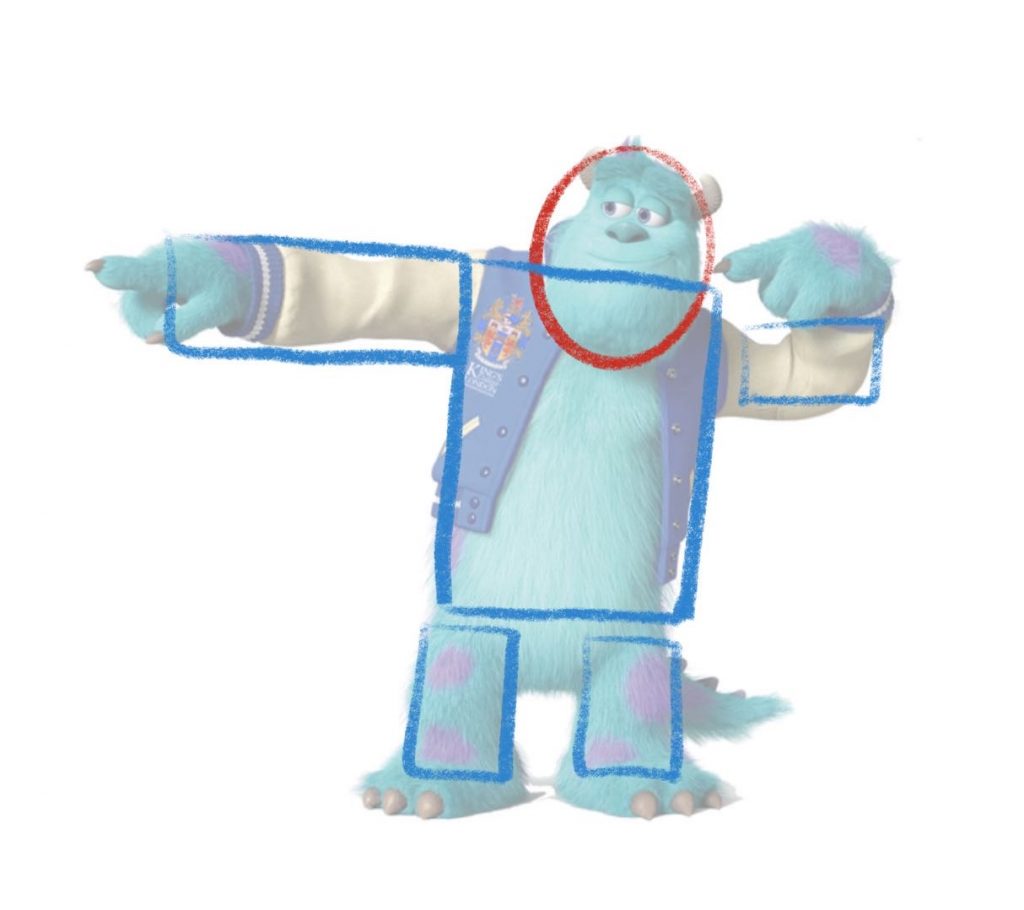
Sully from ‘Monsters University’ in 2013
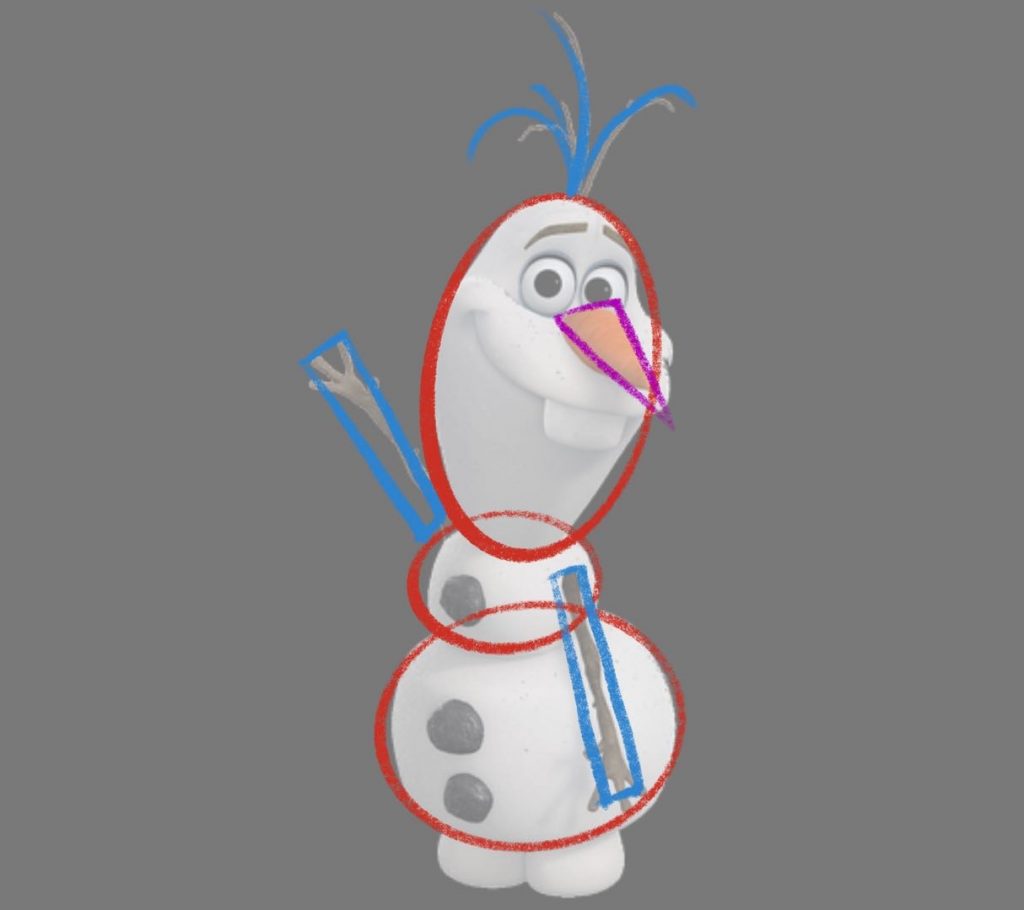
Olaf from ‘Frozen’ in 2013
Additionally, the geometric shapes do not always represent their own original meaning. Sometimes Mixing shapes can be used to mask purpose or function of characters and object. It can make character more layered and help animators show the changes in personality during the character’s development.
Conclusion
Shape language is an important part of character design. By cleverly using different shapes, animators can visually convey the personality and emotions of the character directly to the audience. This principle has been a great help and inspiration for me in learning character design. It enables me to accurately capture the structural silhouette of a character through his personality traits, and then gradually create visually appealing and impressive characters through the contrast and deformation of shapes and colors.
Reference
Shape Language Character Design Techniques | How shape language works?
How does shape language impact a character design? (with illustrated examples) 2024 Updated